
Real vs Faux Leather Jackets: Which One Should You Choose?
There’s something undeniably cool about a leather jacket. It’s a timeless piece, adding an edge to almost any outfit, whether you’re aiming for rugged biker vibes or chic urban style. However, when you start shopping, you quickly encounter a fundamental choice: should you go for genuine leather or opt for a synthetic alternative? Understanding the differences between real vs faux leather is key to picking the jacket that not only looks great but also aligns with your budget, lifestyle, and values.
Choosing between these two materials can feel overwhelming. On one hand, real leather offers that classic look, unique aging process, and renowned durability. On the other hand, faux leather provides a cruelty-free option, often at a lower price point, and comes in a vast array of styles and colors. Consequently, the decision isn’t always straightforward.
This guide is here to help you navigate the real vs faux leather debate. We’ll dive deep into what each material actually is, explore their respective pros and cons, compare them head-to-head on crucial factors like durability, cost, and ethics, and even give you tips on how to tell them apart. By the end, you’ll have all the information you need to confidently choose the perfect leather jacket for you.
So, let’s get started and unravel the complexities of real and faux leather jackets together.
What Exactly is Real Leather?
Before diving into the real vs faux leather comparison, it’s essential to understand what genuine leather truly is. It’s a material with a rich history, valued for centuries for its unique properties.
The Origins of Genuine Leather
Genuine leather originates from the natural world. Specifically, it is made from the skin or hide of animals. The most common sources include cows (producing cowhide, known for its toughness), sheep (lambskin, prized for softness), goats, and pigs. Less commonly, leather can also come from more exotic animals like crocodiles or ostriches, though these are typically much more expensive.
The process of turning raw animal hide into the durable, flexible material we know as leather is called tanning. This crucial step prevents the hide from decomposing and stabilizes its protein structure. Historically, tanning used natural substances like vegetable tannins found in tree bark. Today, while vegetable tanning still exists, chrome tanning (using chromium salts) is more common due to its speed and efficiency. Regardless of the method, tanning is what transforms a perishable hide into usable, lasting leather.
Pros of Choosing Real Leather
Real leather jackets have remained popular for decades, and for good reason. They offer several distinct advantages:
- Durability and Longevity: Perhaps the most significant benefit is its toughness. Well-made genuine leather can last for decades, often outliving its synthetic counterparts significantly. In fact, it doesn’t just last; it often improves with age.
- Unique Character and Patina: Real leather develops a unique patina over time – a soft sheen and subtle variations in color and texture that result from use and exposure. This means your jacket becomes more personal and characterful the longer you wear it, unlike faux leather which tends to degrade.
- Breathability and Comfort: As a natural material, leather has pores that allow it to breathe. This makes it more comfortable to wear than many synthetic materials, as it helps regulate body temperature and reduces sweat buildup. Consequently, it feels better against the skin.
- Timeless Style and Value: A classic leather jacket rarely goes out of style. It’s a versatile wardrobe staple that holds its value relatively well, often seen as an investment piece rather than fast fashion.
- Authentic Feel and Smell: For many, the distinct smell and feel of real leather are part of its appeal. It has a substantial, natural texture that synthetic materials often struggle to replicate perfectly.
Cons of Real Leather
Despite its benefits, real leather isn’t without its drawbacks. Potential downsides include:
- Higher Cost: Genuine leather is generally more expensive than faux leather due to the cost of raw materials (animal hides) and the complex tanning and manufacturing processes involved.
- Ethical Concerns: The use of animal hides raises ethical questions for many consumers regarding animal welfare and the environmental impact of raising livestock.
- Requires Specific Care: Real leather needs maintenance to stay in top condition. This includes regular cleaning, conditioning to prevent drying and cracking, and proper storage away from extreme heat or moisture.
- Heavier Weight: Depending on the type and thickness, real leather jackets can be heavier than their faux counterparts, which might be a consideration for some wearers.
- Susceptibility to Damage: While durable, real leather can be susceptible to scratches, stains, and water damage if not properly treated or protected. Prolonged exposure to direct sunlight can also cause fading.

Understanding Faux Leather Alternatives
Now that we’ve explored genuine leather, let’s turn our attention to its counterpart in the real vs faux leather discussion: faux leather. Also known as synthetic leather, vegan leather, or pleather, this material has gained significant popularity as an alternative.
What is Faux Leather Made Of?
Unlike real leather derived from animal hides, faux leather is entirely man-made. It typically consists of a fabric base (like polyester) coated with a plastic polymer. The two most common types are:
- Polyurethane (PU) Leather: This involves coating a fabric base with a flexible polymer (polyurethane) and then treating it to mimic the texture of real leather. PU leather is generally softer, more flexible, and more breathable than PVC, making it a popular choice for clothing like vegan leather jackets.
- Polyvinyl Chloride (PVC) Leather: PVC leather is made by combining polyvinyl chloride with stabilizers (to protect), plasticizers (to soften), and lubricants (to make flexible), and then applying it to a base material. PVC is typically less breathable and flexible than PU but can be very durable and easy to clean.
In addition to these traditional plastic-based options, innovation has led to newer forms of ethical leather alternatives. These include materials derived from plant sources like pineapple leaves (Piñatex), cork, apple peels, mushrooms (mycelium leather), and even cactus. While often still niche and potentially expensive, these plant-based leathers offer promising sustainable options for the future.
Pros of Opting for Faux Leather
Faux leather presents several compelling advantages, contributing to its widespread use:
- More Affordable Price Point: Generally, faux leather jackets are significantly less expensive than their genuine leather counterparts. This makes the leather jacket style accessible to a wider range of budgets.
- Animal-Friendly and Ethical: For many, the primary appeal of faux leather is that it involves no animal products. This makes it a cruelty-free and ethical leather alternative for vegans and those concerned about animal welfare.
- Lighter Weight: Synthetic leather pros cons often include weight; faux leather is typically lighter than real leather, which can enhance comfort for some wearers.
- Easier Maintenance: Faux leather is non-porous, making it resistant to stains and easy to clean. Often, a simple wipe-down with a damp cloth is sufficient.
- Variety of Styles and Colors: Because it’s synthetic, faux leather can be produced in virtually any color, finish (e.g., matte, glossy, metallic), or texture, offering greater design flexibility.
- Water Resistance: Most faux leathers have good water resistance due to their plastic coating, requiring less worry in damp conditions compared to untreated real leather.
Cons of Faux Leather
However, faux leather also has its limitations when compared in the real vs faux leather matchup:
- Less Durable: This is often the biggest drawback. Faux leather, especially cheaper varieties, doesn’t possess the inherent strength of real leather. It’s more prone to tearing, puncturing, cracking, and peeling over time, particularly at stress points.
- Doesn’t Age Well: Unlike real leather that develops a desirable patina, faux leather tends to simply wear out. It doesn’t gain character; it degrades, often looking less appealing as it ages.
- Less Breathable: Most plastic-based faux leathers (especially PVC) lack the natural pores of real leather, making them less breathable. This can lead to feeling clammy or sweaty during extended wear.
- Environmental Concerns: While avoiding animal products, traditional faux leathers (PU and PVC) are derived from fossil fuels (plastics). Their production can involve harmful chemicals, and their disposal contributes to plastic pollution as they are not typically biodegradable. This complicates the ethical leather alternatives argument for some.
- Can Look and Feel Artificial: While high-quality faux leather can closely mimic the real thing, cheaper versions often have a noticeable plastic-like sheen, feel, or even smell, lacking the authentic quality of genuine leather quality.

Real vs Faux Leather: A Head-to-Head Comparison
Understanding the individual characteristics of real and faux leather is helpful, but a direct comparison often clarifies the choice. Let’s put real vs faux leather side-by-side across key factors to see how they stack up.
Durability Showdown: Real vs Faux Leather Longevity
When it comes to lasting power, real leather generally wins. High-quality genuine leather is incredibly tough and resistant to tearing and abrasion. With proper care, a real leather jacket can last for decades, often developing a desirable patina that enhances its appeal. Think of it as an investment in longevity.
Faux leather, conversely, tends to have a shorter lifespan. While advancements are being made, most synthetic leathers, especially PU leather vs real leather, are more susceptible to cracking, peeling, or tearing over time, particularly with frequent wear or exposure to sunlight and temperature fluctuations. Leather jacket durability is a significant differentiator here; faux leather might last a few seasons, whereas real leather can last a lifetime.
Cost Factor: Comparing Real vs Faux Leather Prices
Cost is often a major deciding factor. Genuine leather jackets command a higher price due to the resource-intensive processes involved: raising livestock, tanning hides, and skilled craftsmanship. The cost of leather jackets made from real leather can range from a few hundred to several thousand dollars, depending on the type of leather, brand, and design.
Faux leather offers a much more budget-friendly alternative. Since the materials are synthetic and manufacturing processes are typically less complex, faux leather jackets are significantly cheaper. You can often find stylish options for under $100. This lower cost of leather jackets makes faux leather an accessible way to achieve the look without the hefty price tag.
The Ethical Debate: Animal Welfare in Real vs Faux Leather
Ethics play a crucial role in the real vs faux leather decision for many consumers. Real leather, by definition, involves the use of animal hides. This raises concerns about animal welfare standards in farming and the ethics of using animal products for fashion. For individuals prioritizing animal rights, real leather is often not an option.
Faux leather, including vegan leather jackets, provides a clear ethical leather alternative as it uses no animal products. This makes it the preferred choice for vegans and those seeking cruelty-free fashion. However, as mentioned earlier, the environmental ethics of plastic-based faux leathers are also debated.
Look and Feel: Aesthetics of Real vs Faux Leather
Discerning the difference by sight and touch can sometimes be tricky, especially with high-quality faux leather. Genuine leather quality often shines through in its unique, natural grain pattern – no two hides are exactly alike. It has a distinct, often pleasant, earthy smell and a supple yet substantial feel that molds to the wearer’s body over time.
Faux leather typically has a more uniform texture and pattern because it’s machine-made. While some PU leather vs real leather options mimic the look well, they often lack the depth and unique character of the real thing. Faux leather might feel smoother or slightly plastic-like and usually lacks the characteristic leather smell, sometimes having a faint chemical odor instead. It also doesn’t develop patina; it simply wears out.
Maintenance Matters: Caring for Real vs Faux Leather
Care requirements differ significantly. Real leather needs attention to maintain its condition. This involves regular cleaning with appropriate products, conditioning to prevent drying and cracking, and storing it properly (avoiding plastic bags and direct heat/sunlight). Leather jacket care for genuine items is an ongoing commitment.
Faux leather is generally much easier to care for. Most spills can be wiped off with a damp cloth. It doesn’t require conditioning and is less sensitive to water. However, it can be damaged by harsh cleaning chemicals or high heat (like in a dryer), so gentle cleaning is still recommended. The ease of maintenance is a definite plus in the synthetic leather pros cons list.
Environmental Impact: Sustainability of Real vs Faux Leather
The environmental footprint of both materials is complex and debated. Real leather production involves the environmental impact of livestock farming (greenhouse gases, land/water use) and the tanning process, which can use potentially harmful chemicals like chromium if not managed responsibly. However, leather is often a byproduct of the meat industry, and vegetable-tanned leather offers a more eco-friendly tanning option. Leather is also biodegradable over the long term.
Traditional faux leathers (PU/PVC) are derived from petrochemicals (fossil fuels), a non-renewable resource. Their production can involve toxic chemicals, and their end-of-life disposal contributes to plastic pollution as they are not readily biodegradable. While ethical leather alternatives like plant-based leathers are emerging with better sustainability profiles, the most common faux leathers present their own environmental challenges. Choosing between real vs faux leather based purely on environmental impact requires careful consideration of the specific materials and production methods.
How to Spot the Difference: Real vs Faux Leather Identification
Sometimes, telling real vs faux leather apart can be challenging, especially with high-quality synthetics designed to mimic the real deal. However, there are several clues you can look for if you want to how to tell real leather from its imitation. Knowing these can help ensure you’re getting the genuine leather quality you expect, or confirm you’ve found a good vegan leather jacket.
Here are some practical tips:
1. Check the Label
This is the easiest first step. Genuine leather products will usually be proudly labeled as such. Look for tags that say “Real Leather,” “Genuine Leather,” “Full Grain Leather,” or “Top Grain Leather.” Faux leather items might be labeled “Man-Made Material,” “Polyurethane,” “PVC,” or simply lack any material information. Be wary if the label seems vague or is missing entirely.
2. Examine the Texture and Pores
Get up close and personal with the material’s surface. Real leather is a natural product, so it will have imperfections. Look for:
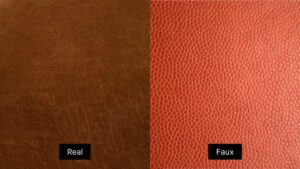
- Irregular Grain: The pattern on genuine leather won’t be perfectly uniform. You might see small variations, scratches, or wrinkles – signs of its natural origin.
- Visible Pores: Real leather has pores, though they might be small. Faux leather often has a repeating, artificially uniform pattern stamped onto it and lacks genuine pores.
Conversely, faux leather often looks too perfect. The pattern repeats identically across the surface, a tell-tale sign of machine production. When comparing PU leather vs real leather, the PU might feel smooth but lack the subtle depth and variation of genuine hide.
3. The Smell Test
Real leather has a distinct, rich, slightly earthy smell that is difficult to replicate. If you’re familiar with it, this scent is a strong indicator of authenticity. Faux leather, on the other hand, often has no smell or a noticeable plastic or chemical odor, especially when new. So, don’t hesitate to give the jacket a gentle sniff!
4. Look at the Edges
Examine the edges of the jacket, perhaps at the seams or cuffs. Real leather often has slightly rough, fibrous edges where it’s been cut. Faux leather tends to have smooth, perfect, almost plastic-like edges, as the synthetic material is layered over fabric.
5. The Water Test (Use with Caution)
Real leather is somewhat absorbent. If you place a tiny drop of water on an inconspicuous area, genuine leather will typically absorb it after a few moments. Faux leather, being plastic-based, is generally water-resistant, and the water droplet will likely just sit on the surface. Important: Only try this if you own the item or have permission, and use a very small amount of water, as excessive moisture can damage real leather.
6. Price as an Indicator
While not foolproof (as some high-end faux leathers can be pricey), cost is often a significant clue in the real vs faux leather puzzle. If a “leather” jacket seems remarkably cheap, it’s far more likely to be faux. Genuine leather involves higher material and production costs, which are reflected in the final price. Expecting genuine leather quality usually means being prepared for a higher cost of leather jackets.
By using a combination of these methods, you can become much more confident in distinguishing between real and faux leather when making your next jacket purchase.
Making Your Choice: Is Real vs Faux Leather Better for You?
Ultimately, the real vs faux leather decision comes down to personal priorities. There’s no single “best” answer; the ideal choice depends entirely on your individual needs, preferences, and circumstances. To help you decide which best leather jacket material suits you, consider these key factors:
Consider Your Style and Use Case
How do you plan to wear your jacket? Is it intended as a rugged, everyday staple meant to endure years of wear and tear? Or is it more of a fashion piece for occasional outings or trying out a specific trend?
- For long-term, frequent wear: If you value leather jacket durability and want a piece that will age gracefully and potentially last decades, real leather is often the better investment. Its ability to mold to your body and develop a unique patina adds to its long-term appeal.
- For occasional wear or trendy styles: If you want a jacket for specific occasions, or if you like to experiment with different colors and styles frequently without a major financial commitment, faux leather offers great versatility and affordability. You can embrace a trend with a vegan leather jacket without worrying about a high initial cost of leather jackets.
Think about the overall aesthetic you prefer. Real leather offers a classic, authentic look, while faux leather can provide bolder colors or finishes that might align better with certain fashion-forward styles.
Factor in Your Budget
Budget is often a non-negotiable factor. As discussed, there’s a significant price difference in the real vs faux leather comparison.
- Investment piece: If you view the jacket as a long-term investment and have the budget for it, high-quality genuine leather quality can be worth the price due to its longevity and timeless style.
- Budget-conscious choice: If your budget is tighter, or you’d rather spend less on this particular item, faux leather provides the desired look at a much lower cost of leather jackets. This allows you to enjoy the style without breaking the bank.
Remember to consider the cost-per-wear. A more expensive real leather jacket worn for 10 years might ultimately have a lower cost-per-wear than a cheaper faux leather jacket that needs replacing after only two seasons.
Align with Your Personal Values
Your personal ethics and environmental stance are crucial considerations, particularly regarding ethical leather alternatives.
- Prioritizing animal welfare: If avoiding animal products is important to you, faux leather (especially certified vegan leather jackets) is the clear choice. It offers a cruelty-free way to enjoy the leather look.
- Considering environmental impact: This is more nuanced. If your concern is primarily plastic pollution and fossil fuel reliance, you might lean towards responsibly sourced real leather (e.g., vegetable-tanned, byproduct leather) or investigate newer plant-based ethical leather alternatives. If livestock farming’s impact is your main concern, then faux leather (perhaps prioritizing recycled or plant-based options if available) might be preferable.
There’s no right or wrong answer in the real vs faux leather debate when it comes to values, only what aligns best with your personal convictions.
By carefully weighing these factors – your intended use, budget constraints, and ethical considerations – you can make a well-informed decision and choose the jacket that truly fits your life.
Essential Care Tips for Your Jacket
Whether you choose real vs faux leather, proper care is essential to keep your jacket looking its best for as long as possible. However, the specific leather jacket care methods differ significantly between the two materials.
Caring for Your Real Leather Jacket
Genuine leather requires a bit more attention to maintain its suppleness and prevent damage. Here’s a basic guide:
- Cleaning: For general dust and dirt, wipe the jacket down with a soft, dry cloth or a slightly damp one. For minor stains, use a cleaner specifically designed for leather. Always test any cleaning product on an inconspicuous area first. Avoid harsh soaps or detergents, as they can strip the leather of its natural oils.
- Conditioning: This is crucial for preventing real leather from drying out, cracking, or becoming stiff. Apply a quality leather conditioner every 6-12 months (or more often if you live in a very dry climate or wear the jacket frequently). Use a soft cloth to apply the conditioner evenly, let it absorb, and then buff off any excess.
- Water Protection: While some leather is treated for water resistance, it’s generally not waterproof. If your jacket gets wet, let it air dry naturally away from direct heat sources (like radiators or hairdryers), which can cause it to shrink or warp. Consider applying a water-protectant spray designed for leather for added protection.
- Storage: Store your real leather jacket on a wide, padded hanger to maintain its shape. Avoid folding it for long periods, which can create permanent creases. Keep it in a cool, dry place away from direct sunlight, which can cause fading. Don’t store it in a plastic bag, as leather needs to breathe.
Proper leather jacket care for real leather is an investment in its longevity and appearance.
- Learn more with our Leather Fashion Trends 2025
Maintaining Your Faux Leather Jacket
Faux leather care is generally simpler, aligning with the synthetic leather pros cons of easier maintenance.
- Cleaning: Most faux leather jackets can be easily wiped clean with a damp cloth and mild soap if necessary. For tougher spots, check the manufacturer’s care label. Avoid abrasive cleaners or solvents that could damage the plastic coating.
- Avoid Heat: Faux leather is sensitive to high heat. Never put a faux leather jacket in the dryer, and avoid ironing it directly (if ironing is necessary, use the lowest setting with a pressing cloth between the iron and the jacket, and test on an inside seam first). Keep it away from direct heat sources.
- Storage: Store your faux leather jacket on a hanger in a cool, dry place. While it doesn’t need to breathe like real leather, avoid cramming it tightly with other clothes to prevent creasing or potential sticking to other synthetic materials.
- Preventing Peeling/Cracking: While less demanding than real leather, avoid folding faux leather tightly for extended periods, as this can contribute to cracking over time, especially with lower-quality materials. Handle it with reasonable care to maximize its lifespan.
By following these simple care instructions tailored to whether you have real vs faux leather, you can significantly extend the life and enjoyment of your jacket.
How to Style a Leather Jacket for Every Season check out this
Conclusion: The Final Verdict in Real vs Faux Leather
Choosing between a real vs faux leather jacket isn’t about finding a universally superior option, but rather identifying the material that best suits your specific needs and priorities. As we’ve explored, both genuine leather and its synthetic counterparts offer distinct advantages and disadvantages.
Real leather brings unparalleled durability, a unique character that improves with age, and a classic, breathable feel. It’s an investment piece, ideal for those seeking longevity and timeless style, provided the higher cost and ethical considerations align with their values. Proper leather jacket care is essential but rewards you with a jacket that can last a lifetime.
Faux leather, including popular vegan leather jackets, provides an affordable, versatile, and cruelty-free alternative. It excels in variety, ease of maintenance, and accessibility. While its leather jacket durability might not match real leather, and it lacks the natural aging process, it’s an excellent choice for budget-conscious shoppers, those prioritizing ethical leather alternatives, or individuals seeking trendy styles without a long-term commitment. Remember to consider the synthetic leather pros cons, including potential environmental impacts of plastics.
Ultimately, weigh the factors we’ve discussed:
- Durability & Longevity: Real leather wins for long-term wear.
- Cost: Faux leather is significantly more affordable.
- Ethics: Faux leather is animal-free; environmental impacts vary for both.
- Look & Feel: Real leather offers unique patina; faux offers variety.
- Maintenance: Faux leather is generally easier to care for.
By understanding these key differences in the real vs faux leather debate and knowing how to tell real leather apart, you’re now equipped to make an informed choice. Select the jacket that not only complements your wardrobe but also resonates with your lifestyle and principles.
What are your thoughts on real vs faux leather? Share your experiences or questions in the comments below! We’d love to hear from you. And if you found this guide helpful, consider subscribing for more style tips and comparisons!